Liquid Cooling Insights
Mikros Technologies' Direct-to-Chip Cold Plates Advance Immersion Liquid Cooling.
Taking a Hybrid Approach to Data Center Cooling Saves Energy
By Michael Steel, Lead Mechanical Design Engineer, Mikros Technologies
October 5, 2024
It is a fact that chips are working harder than ever before. In our data-driven world, we rely on powerful computing systems that generate significant amounts of heat. The rise of artificial intelligence (AI), machine learning (ML), and other high-performance computing functions is accelerating power demands. Since air cooling reaches its limits around 20 kilowatts per rack, traditional air-cooled systems can’t manage the heat waste as quickly or efficiently as liquid cooling technologies can.
Cooling already plays a significant role in overall data center power consumption. According to the International Energy Agency (IEA), cooling alone can represent around 40 percent of the total power required to operate a data center. This reality underscores the need for effective cooling strategies. Data center owners and operators are facing intense regulatory and corporate pressures to reduce energy consumption and increase infrastructure sustainability.
One Plus One, Equals Three.
This rapid increase in energy consumption poses a significant threat to sustainability goals. According to the Uptime Institute, a quarter of data center rack densities are already exceeding 20 kilowatts, and five percent are exceeding 50 kilowatts. This kind of power is required for cooling central processing units (CPUs) and high-density graphics processing units (GPUs), which are essential for digital image processing, video rendering, and AI computing.
In response to rising rack densities and temperatures, many data center owners and operators are proactively considering or have already embraced liquid cooling technologies. The benefits are compelling: liquid cooling significantly improves thermal efficiency through enhanced power usage effectiveness (PUE), lowers capital and operational expenses, and elevates data center performance and reliability by maximizing computing capacity in the given space.
Among the leading liquid cooling strategies are immersion cooling and direct-to-chip cold plates. However, many are not aware that these technologies can be seamlessly integrated for a hybrid cooling solution. Embracing this innovative approach to cooling will ensure that data centers meet performance requirements and increase energy efficiency in an increasingly power-hungry digital landscape.
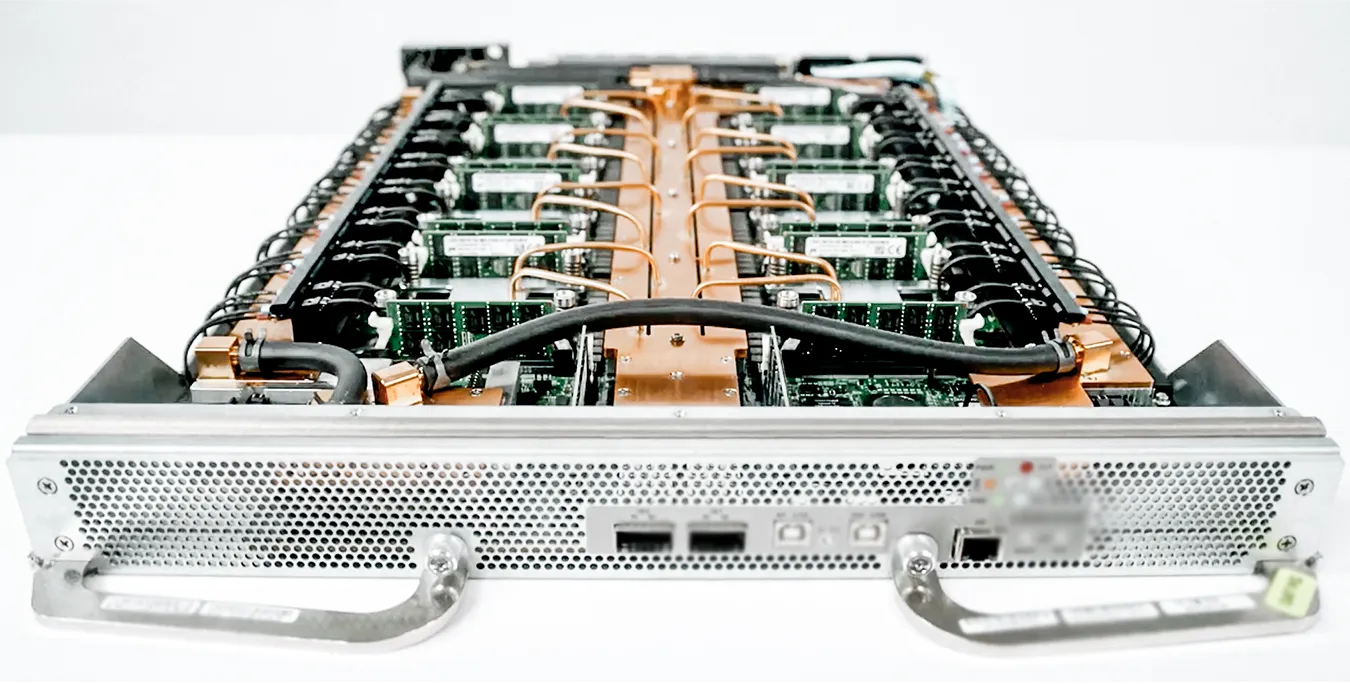
What’s the difference?
Immersion and direct-to-chip cooling are two distinct liquid technologies, but both can play crucial roles in data center thermal management. The main differences lie in how each technology is applied within servers and how heat waste is transferred and dissipated.
Immersion liquid cooling is a niche application, but it’s changing the way some computer servers and data storage systems are managed and maintained. This method of cooling involves submerging electronic components, server drawers, and racks into a bath of dielectric fluid. This special coolant is chemically engineered to serve two functions: it cools the hardware through heat absorption and dissipation, and it acts as an insulator, preventing electrical interference that could disrupt normal server operation.
Direct-to-chip technology, which uses devices known as cold plates or water blocks, is a conductive cooling device that protects hardware from overheating. This device is mounted directly onto chips, and the heat waste is transferred into a coolant circulating through a series of microchannels. Cold plate designs integrate seamlessly with existing data center infrastructure. The cooling efficiency provided by this technology is pivotal in managing increasing compute power.
How do I integrate Direct-to-Chip and Immersion Liquid Cooling?
Immersion liquid cooling is a promising technology for managing high-power servers. Companies can achieve even greater operational savings when this cooling method is combined with an advanced and highly effective cold plate technology. Mikros Technologies, a proven innovator in thermal management, has developed MikroMatrix™ technology that enables the company to build efficient, high-quality cold plates for immersion liquid cooling applications. These designs provide localized cooling, thus increasing coolant bath efficiency. Here’s how it works.
A cold plate is seamlessly integrated with a heat-generating device, enabling direct fluid contact to transfer heat waste from the device to the coolant flowing through the cold plate. Next, the cold plate loop transfers the heat to the dielectric fluid that surrounds the system. Finally, the dielectric fluid dissipates the heat as it cycles into the larger volume of dielectric fluid in the enclosure.
Benefits of Technology Integration
Embracing this hybrid approach to thermal management has several benefits. Dielectric fluids are effective at absorbing and dissipating heat on their own. Still, when paired with the precision and high heat flux cooling capabilities of cold plates, the results are exceptional. Mikros Technologies will design and manufacture a custom solution for your project. Our cold plates have ultra-low thermal resistances of 0.015 to 0.040 °C-cm²/W, high heat fluxes over 1000 W/cm², and will protect your CPU, GPU, and application-specific integrated circuits (ASIC) from overheating.
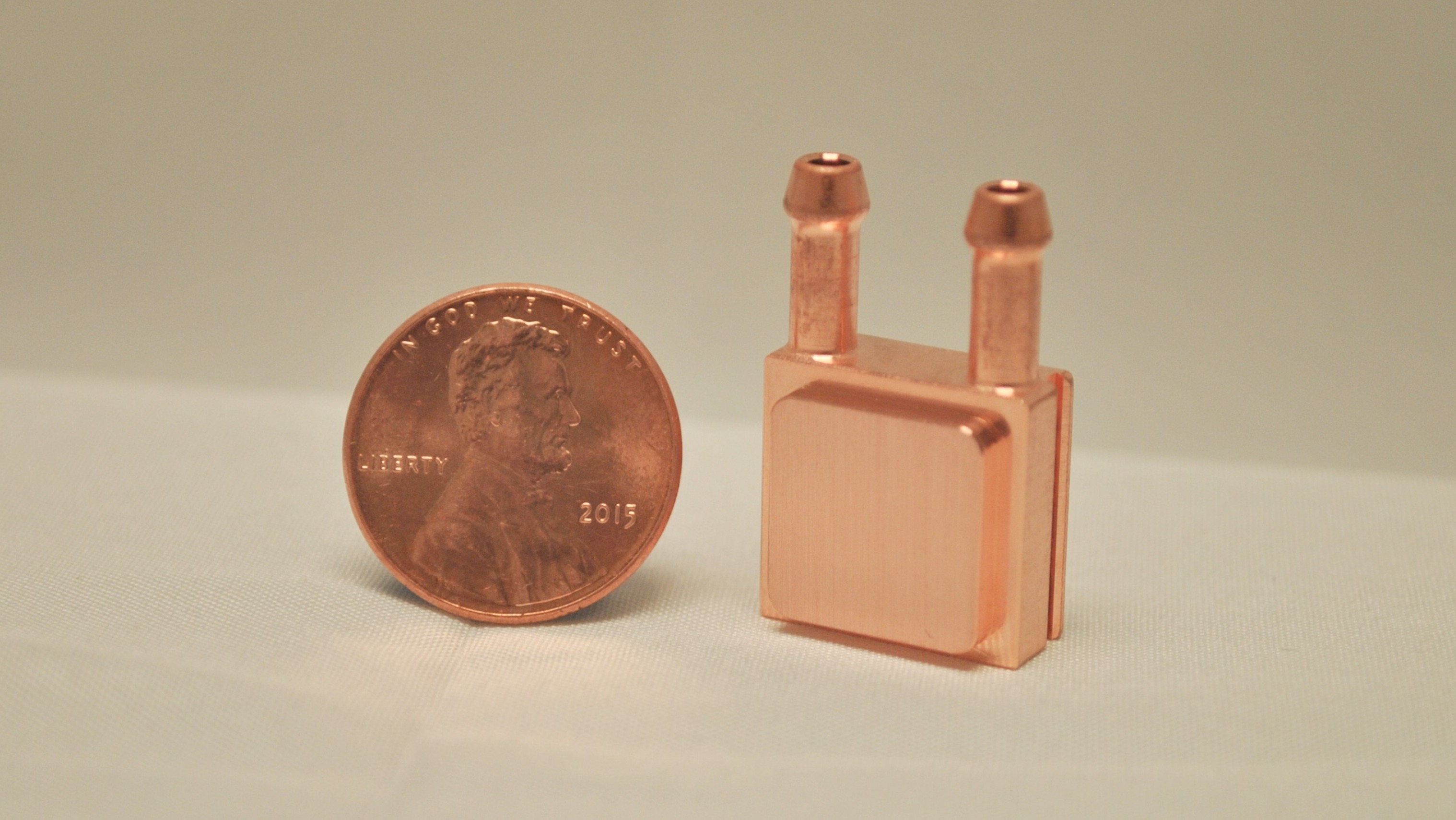
Cold plates also extend the life of your data center hardware by reducing temperature gradients on CPU, GPU, and ASIC dies. Plus, the modular design of cold plates allows for easy integration and scaling within immersion data center infrastructures. This flexibility ensures that as data demands grow and chips generate more heat, the cooling system can adapt and expand as needed.
Furthermore, Mikros Technologies’ microchannel cold plates are engineered and manufactured for reliability and durability. Their thin, lightweight design and brazed copper construction ensure reliable performance under high thermal loads and when submersed in dielectric fluid.
The Future of Data Center Cooling is Liquid
Cooling accounts for a sizeable portion of energy use. As the next generation of chips reaches one kilowatt of power and data centers consume increasing amounts of electricity, it is essential to embrace liquid cooling for thermal management strategies. The pairing of direct-to-chip and immersion liquid cooling systems is highly effective for increasing data center performance and sustainability for businesses.
We partner with you to drive your business success.
You can find answers to many of our frequently asked questions.
Explore fully-integrated liquid cooling solutions at scale.